
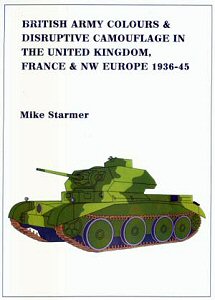
 British
Army Colours and Disruptive Camouflage in the United Kingdom, France and N.W.Europe,
1936-1945
British
Army Colours and Disruptive Camouflage in the United Kingdom, France and N.W.Europe,
1936-1945by Mike Starmer
Review by Peter Brown
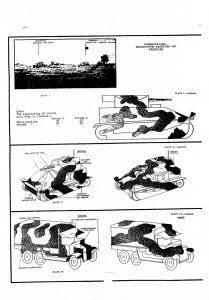
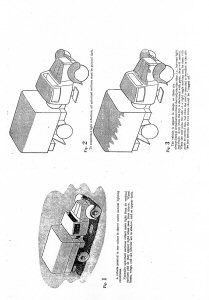
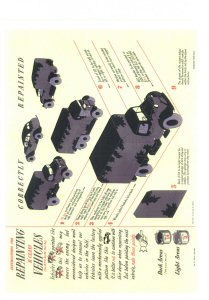
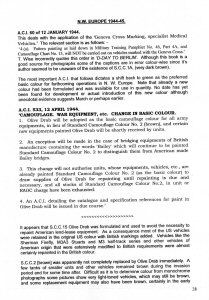
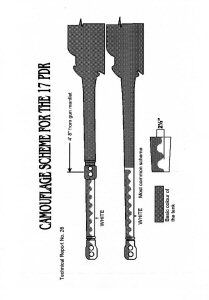
Another in Mike Starmer’s authoritative series of books on British vehicle colours and camouflage schemes has been updated. As with the original edition reviewed on this site in June 2005, it follows the same format self-produced without frills and spiral bound but now comes with laminated front and back covers. As usual with Mike’s books, this may not look as glossy as something from a mainstream publisher but the content more than makes up for any shortcomings in appearance. Size has increased from the original’s 31 pages of text plus another seven of illustrations; it now has 40 pages text, eight of black and white illustrations mostly from original manuals, and a bonus of three colour plates reproduced from original instructional posters.
While extra information has been added, the core of the book and its aims remains the same. It describes the various colours and camouflage schemes used in the UK from pre-war years to the end of WW2 as well as those used by British forces in France in 1939-40, the formations from the UK who went to Tunisia in 1942-43 and the campaign in Northwest Europe 1944-45. It begins with pre-war experiments into camouflage and then describes the systems in use at the outbreak of war, the first green colours used in the early phases including extracts from the 1939 “Camouflage - Disruptive Painting of Vehicles” pamphlet, the change to brown shades with darker over painting, Military Training Pamphlet No 46 of 1941 which brought in various schemes including what has become known as “Mickey Mouse Ear”, and the final wartime scheme with the introduction of the British “Olive Drab” equivalent.It uses original official sources such as the Army Council Instructions or ACIs which introduced and replaced colours and schemes as time progressed, and is illustrated using extracts from various Military Training Pamphlets issued to guide the correct application of each system as it came in. British practice was also followed by the Canadians as well as Free Forces such as the Poles, Czechs and Belgians, vehicles supplied to the Russians would also be in the basic factory schemes as well.
Along the way the principles of camouflage painting of vehicles are described, why the top surfaces of trucks were painted a dark shade, how shadows were disguised and other matters. There are a few notes on markings though only the standard serial number and identification signs including the Allied white star from the European campaign as well as the AFV recognition markings used in the BEF and the mid-war RAC flash.
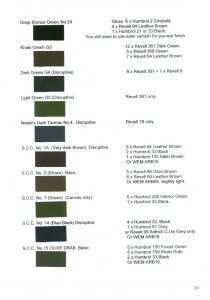
Text and illustrations are very good, most of the latter come from the original sources with explanatory notes added. Modellers and vehicle restorers will appreciate the colour chips of the early-war G3 for which a new colour match is provided reflecting the latest findings plus the two contrasting greens which went with it, the SCC2 shade which replaced them with its appropriate shading colours and the final SCC15 “Olive Drab” shade. These come with recommended colour mixes for those who use Revell and Humbrol enamel paints as well as WEM colours where appropriate, anyone using other brands can use the actual paint chips to match the shades with their own mixes.
As with the earlier edition, just describing the content may make it look as if there is little in the book but that would be far from being the case. Many previous attempts at describing colours fall down because they did not have all the instructions for each change including the all-important dates when they were introduced. Even those with photos or colour plates do not have the colour chips as a guide. Here you have an authoritative one-volume source on colour schemes which will be an invaluable reference used again and again.
Copies can also be bought direct from the author at 18 Hillside Road, Piddington, Northants, NN7 2DB, England Price including postage within the UK is £12.00 with overseas orders at £13.00 Overseas buyers are advised to email the author direct on michael_starmer@hotmail.com if they want to buy this or the other books in this series - Desert Colours: Alamein and After 1942-43, Middle East Colours: Sicily and Italy 1943-45 and the recently revised Caunter Scheme which are available at the same prices as this new edition.
In addition a few specialist outlets carry this book, those based in the UK who attend shows could see it at Bull Models while both White Ensign Models and Aviation and Military Books offer them by mail order as well as at shows.
Please to help the reviews continue, thank you
