
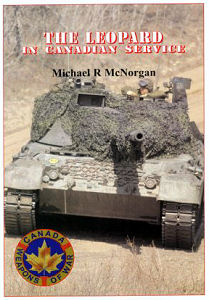
 The
Leopard Tank
in Canadian Service
The
Leopard Tank
in Canadian Serviceby Michael R McNorgan.
Canada's Weapons of War Series, WOW013
A5 size softback, 24 pages
ISBN: 1-894581-31-8
Service Publications,
Canada
www.servicepub.com
Review by Peter Brown
The Canadian Army used the British Centurion as its main battle tank for several years, but by the start of the 1970s it needed a more modern replacement. Their choice was the German Leopard and plans were made but changes and delays meant that the purchase was not made until 1976, by which time a new generation of tanks was all but ready to appear. However the Leopard 1A4 remained the choice, with some older 1A2 being tanks leased while they were being built. In the end 128 tanks were bought and were used as part of Canada’s commitment to NATO and for training at home. To support them, smaller numbers of Armoured Recovery Vehicles, Bridgelayers and later Engineer variants were purchased.
While no longer at the cutting edge of armour technology, the Leopard C1 as it was known in service was far in advance of the old Centurion. Its night vision systems were much appreciated, though on the down side there was less spare space for the crew while the maintenance contract with the manufacturers meant that minor repairs could not always be carried out by the crews themselves. Leopards were to serve well until the end of the Cold War when they were shipped "home" to Canada. A few were deployed to Kosovo in 1999 and the fleet was modernised by the strange but sensible move of buying ex-German Army 1A5 tanks and fitting the older but modernised A2 turrets with more modern fire control and add-on armour. Still more improvements have resulted in composite armour packages being developed to be fitted when needed, which will extend their useful lives for some time yet.
This account covers the story of the Canadian Leopard, with accounts by the crews including details of the units using them and the changes in armour policy over the last 25 years or so. It is illustrated with some good black and white photos of the basic gun tanks including shots of them with mine rollers, ploughs and dozer blades, and also of the supporting variants. Brief details of the basic tank are included, enough for those who do not know their Leopards though not a full history which anyway can be found elsewhere. Centre spread has 1/35 four view plans of a C1.
There are a few drawbacks to the coverage, such as not detailing the small changes between a stock Leopard 1A4 and the C1 which are important to the modeller, and not much detail is given of the upgraded C2 or the full add-on armour package. These small points, together with an obvious mistake on the first photo which shows a C2 not a leased 1A2, still leave a good account of the use of the Leopard by the Canadians which will be of interest to modern AFV enthusiasts whether they want the coverage for its national content or as part of the world-wide picture.
Thanks to Clive Law at Service Publications for the review book.